RISING FROM THE CONVERGENCE OF CITY AND SEA, BULGARI’S CORAL-WRAPPED LIGHTHOUSE SETS A STUNNING NEW STANDARD FOR HIGH LIVING IN DUBAI
BY EMMA FLOYD
The Bulgari Lighthouse rises quietly from the edge of Jumeirah Bay, a tower that seems to belong more to the sea than the city behind it. Its surface catches the light in slow shifts of color, moving from gold in the morning to pale silver by dusk. From the bridge that links the island to the mainland, the tower appears to float, its reflection dissolving into the water below. Every detail feels intentional, steady, and aware of time and place.
The building is the latest collaboration between Bulgari and Meraas, a partnership that has shaped Jumeirah Bay into one of Dubai’s most exclusive and coveted addresses. Across the water, the Bulgari Resort and Yacht Club sits low and deliberate, its architecture unfolding horizontally along the coast. The Lighthouse, by contrast, stretches upward, slender and calm. Both were designed by the Milan-based studio Antonio Citterio Patricia Viel, whose work often favors balance and proportion over spectacle. Their design for the Lighthouse draws from coral, not as a motif or ornament, but as logic.

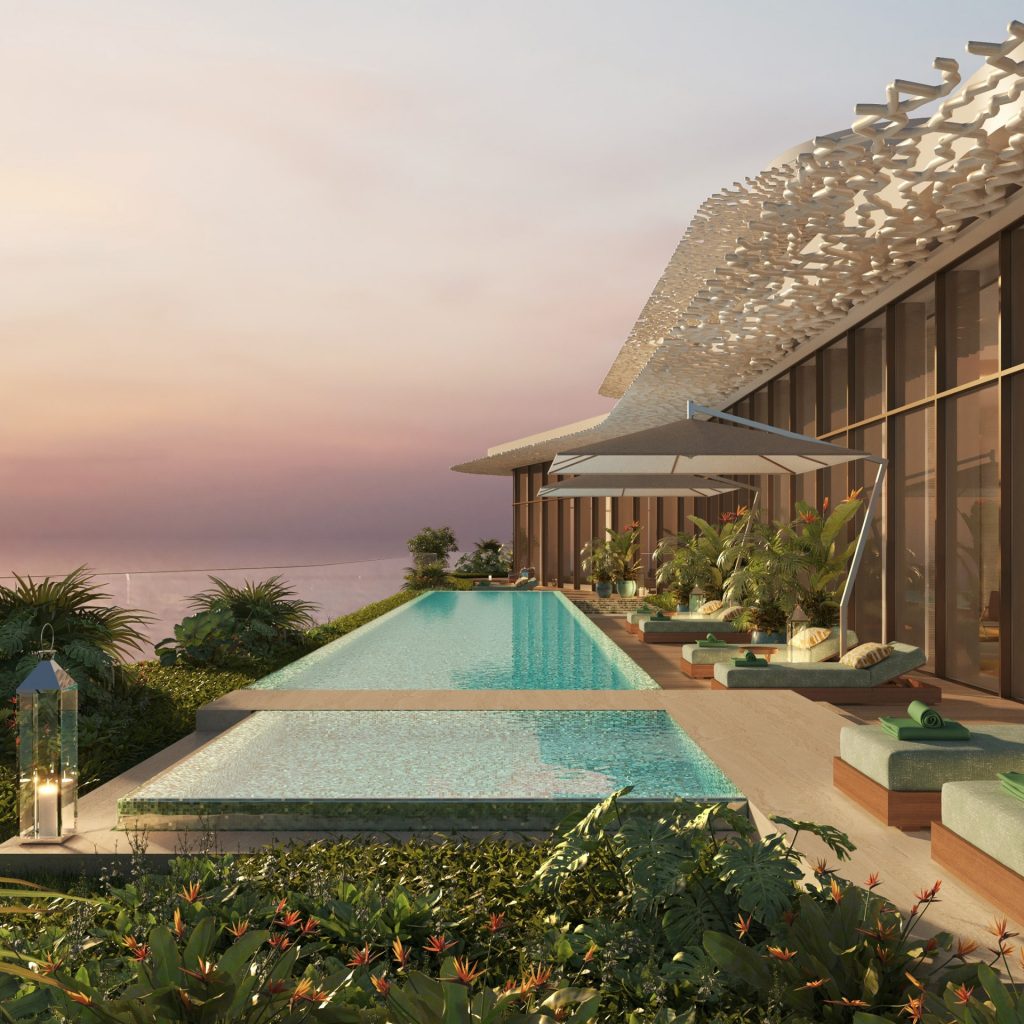
Coral forms in layers that filter light, protect what’s inside, and remain porous enough for life to move through. The building flows in that same rhythm. Each floor is wrapped in horizontal fins that shade the glass, creating a soft gradient of shadows. As the sun shifts, the façade seems to breathe glowing in the morning, deepening in the evening, and settling into shadow at night.

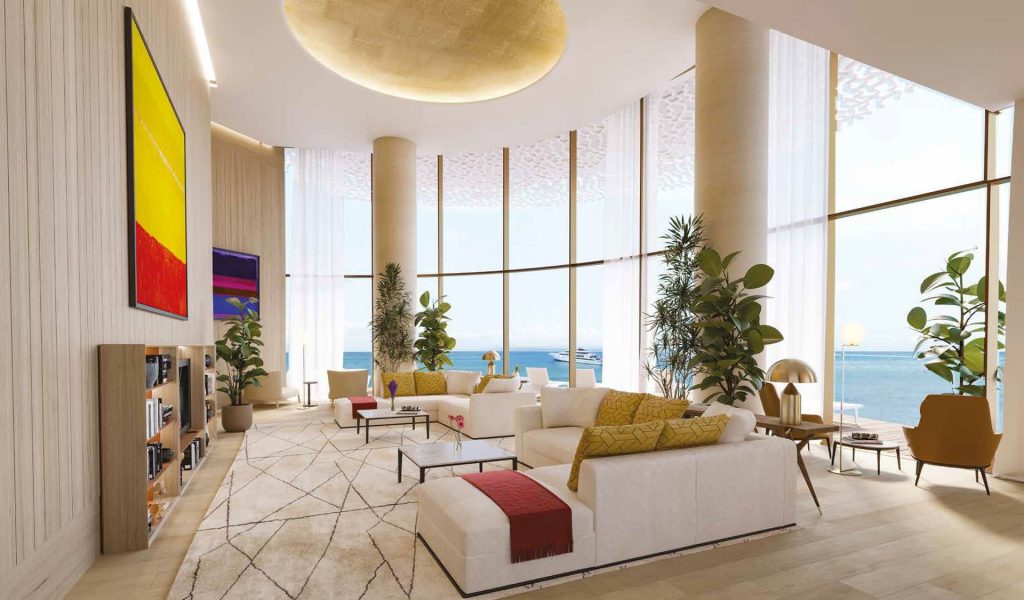
 Inside, the materials carry this same restraint: pale oak, travertine, brushed bronze, and glass. Each texture is chosen for how it reacts to light rather than how it stands out. The rooms open entirely to the sea, drawing the horizon into the interior. The palette stays neutral, designed not to shock but to foster tranquility. Nothing feels abrupt. Every junction is softened; every transition is measured. Each residence feels like a haven rather than a conventional city condo. The layouts are open and fluid, with rooms spilling onto terraces that trace the edges of the façade.

The penthouses carry the space and privacy of a villa, reimagined in the sky. At the top, the Sky Villa crowns the building, complete with its own pool, a stack of terraces, and glass walls that draw the horizon indoors. The unbroken connection between interior and exterior gives the architecture its calm. Here, luxury feels tied to space and silence, not to excess or display.

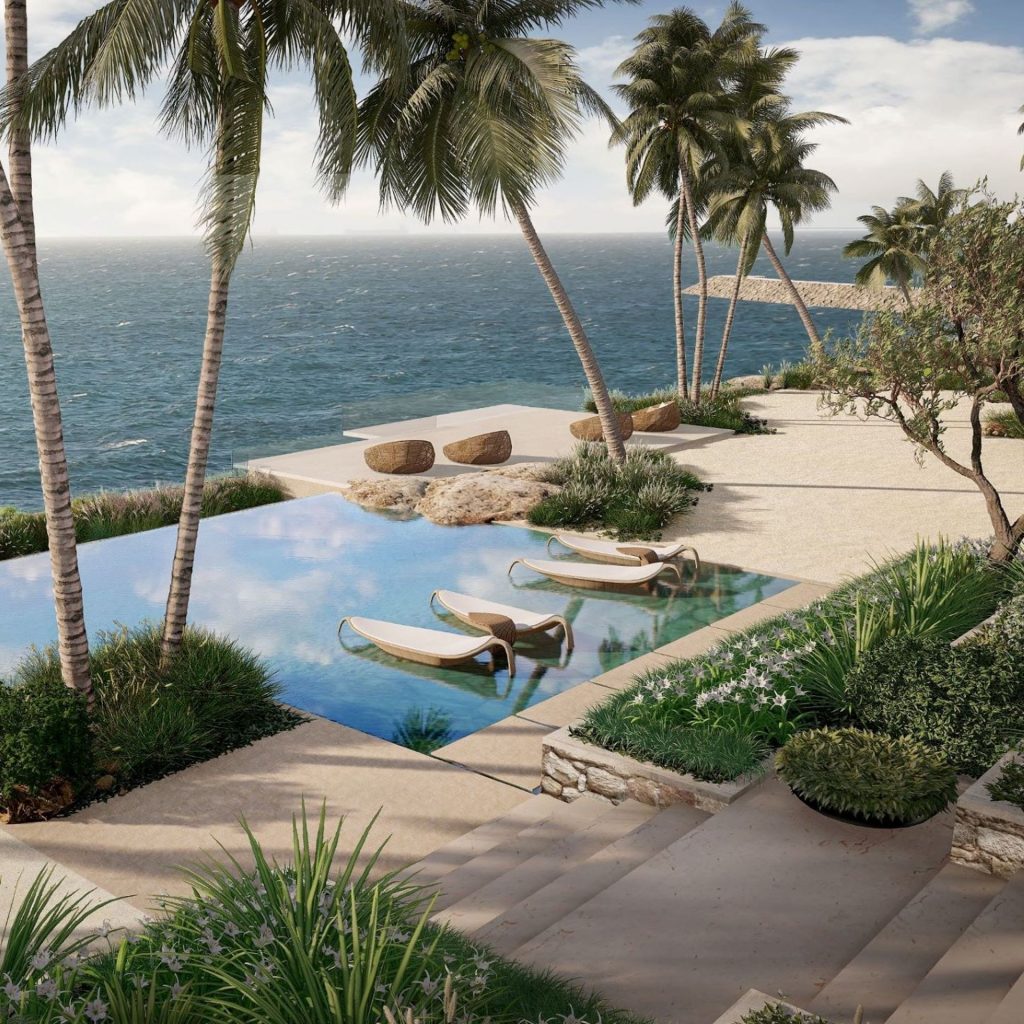
Even the arrival sequence has been choreographed. Cars move along a curving, palm-lined approach before gliding into a lobby of muted stone and bronze. The transition from the island to the property feels almost cinematic precise and enveloping.

The relationship with the adjacent Bulgari Resort extends this same experience to homeowners. Residents have access to the Yacht Club, a marina with 46 berths, a lounge, and an upscale Italian restaurant facing the bay. The resort’s spa, restaurants, and beachfront pools sit only a short walk or drive away along the island’s main road. This synergy blurs the line between home and hotel, shaping a lifestyle that feels both private and celebratory.
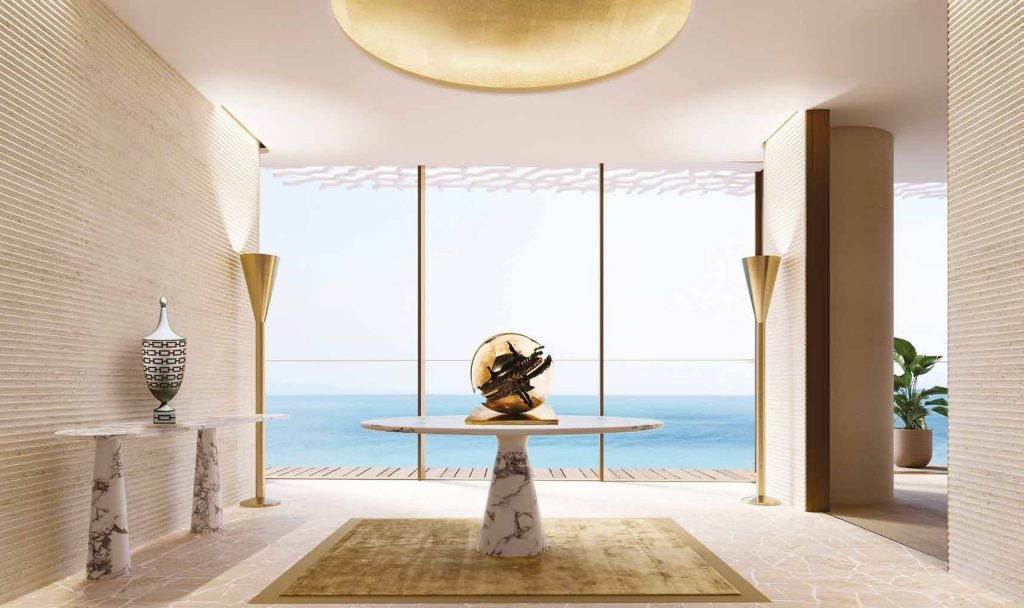
What truly defines the Lighthouse, though, is the atmosphere. The architects use the word luxury, but here it becomes tangible. When the sliding glass doors open, the only sounds that carry in are the wind and the sea’s low hum. The building feels tuned to quiet. Proportion, texture, and light work together to create stillness something that feels rare in Dubai. That same discipline runs through every detail. The façade lighting was designed to echo the soft bioluminescence of coral, casting a glow rather than a glare. From a distance, the effect is closer to a shimmer than a statement. Seen from the water, the tower becomes a beacon, living up to its moniker rather than leaning on symbolism. Inside, concealed fixtures wash walls and ceilings in diffused light that draws attention to the materials themselves rather than their form. Every choice focuses on proportion, scale, and the natural character of light.
The collaboration between Bulgari and Meraas has always centered on refinement. Together, they’ve created a visual language that resists the excesses of the city around it. The Lighthouse continues that idea. It translates Bulgari’s precision and craftsmanship into architecture that feels lasting. Rather than branding through iconography, the building embodies the same values that define the maison’s design: balance, intention, and longevity.

In a skyline built around spectacle, the Bulgari Lighthouse stands apart through control. It doesn’t rely on height or shape alone to make its mark. Its strength lies in restraint. Every decision feels measured, from the rhythm of the f ins to the tone of the stone. The architecture doesn’t beg to be looked at; it holds your attention because it’s resolved. From the water, the building seems almost weightless. The layered fins catch the evening light, and the reflections ripple along the surface of the gulf. From within, the view extends endlessly outward, the city visible in the distance like a whimsical mirage. The tower’s name becomes its experience: a structure that guides the eye, filters light, and turns the horizon into architecture.
The Bulgari Lighthouse represents a different kind of luxury in the City of Gold. It is less about arrival and more about continuity, about the feeling of permanence that takes shape when design, light, and craftsmanship align. It does not shout or compete; it endures. On this island shaped by sea and sand, it stands as a quiet marker of how modern architecture can still find grace in simplicity.


Bulgari Lighthouse Dubai