FUTURE PRESENT
Masterminded by supernova architect Santiago Calatrava, a native son, the sprawling, futuristic City of Arts and Sciences campus has vaulted Valencia into the ranks of elite cultural capitals. This is a citadel of discovery and delight. The planetarium and laserium, L’Hemisferic, resembles a giant eye, with a working eyelid. Four breathtaking music halls shelter under Palau de les Arts’ roof of gently rustling metal feathers. The experiential science museum, recalling a dinosaur spine, illuminates mysteries like DNA, gravity, and evolution. The garden-like botanical museum, Umbracle, doubles as a restful sculpture park, while L’Oceanografic, Europe’s biggest aquarium, flows with 11 million gallons of H2O. A submerged, glass-walled restaurant, Submarino, treats diners to sea creatures gliding by. cac.es
THE WHEEL DEAL

Happy beautiful tourist woman on bike, in europe
Valencia is Spain’s third-largest metropolis, yet still unfamiliar to many globetrotters acquainted with Madrid and Barcelona. Its time has come, but without the tourist hordes (yet, at least). Here, you set your own pace exploring an ancient yet avant-garde city, on foot or on two wheels, as Valencia’s bike culture rivals Amsterdam and Copenhagen. You can cycle traffic-free for hours on 125 miles of gratifyingly flat paths that take in historic sites, natural wonders, architectural jewels, and the medieval quarter, whose speed limit is 19mph for cars. Reliable, inexpensive rental shops like MO’bike abound, with optional expert-led small-group tours. Or you can pedal straight to the beach. mobike.es
PAELLA PARADISE
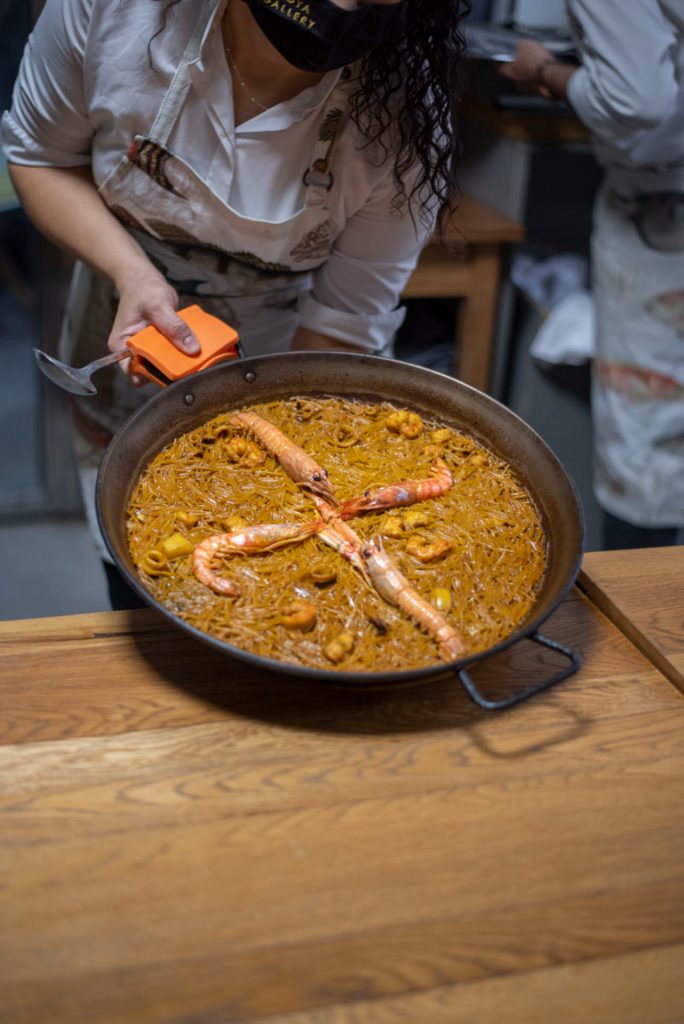
This town is passionate about its culinary creation, paella, cooked in a giant pan over an orangewood fire. You can expect locally cultivated rice with just-caught seafood, traditional chicken and rabbit, or organic vegetables. The historic district’s Pelayo Gastro Trinquet, in a restored pelayo (handball) club, blends cutting-edge décor with reverentially prepared paella. The cozy Goya Gallery, flaunting a trendy Ruzafa district setting and a Michelin Bib Gourmand citation, hums with the contented chatter of demanding devotees. La Divina Comedia Playa, beachside in Cabanyal, delivers palate-pleasing paella, amiable ambiance, and superb sangria. Essential everywhere: reservations for your table and paella, typically cooked for two
GARDEN OF EATIN

Buying seafood in central market in Valencia, Spain
Locals’ daily shopping mecca, the graceful Mercat Central (Central Market), merges gastronomy, neighborliness, and Valencian refinement. Its Art Nouveau glass dome throws rays of sunlight onto 86,000 square feet of shops and cafés, lending magic to this realm of exquisite edibles. Some visitors are drawn every morning to admire and sample the market’s ultra-fresh indigenous bites: seafood, meats, cheeses, bread, pastries, sweets, and spices, plus flowers, kitchenwares, and vibrant Valencian produce. Packaged eats abound too, like chocolate, wine, and olive oil from Milenarios, the region’s 1,000-year-old olive trees. A better takeout lunch doesn’t exist. mercadocentralvalencia.es
GREEN SCENE
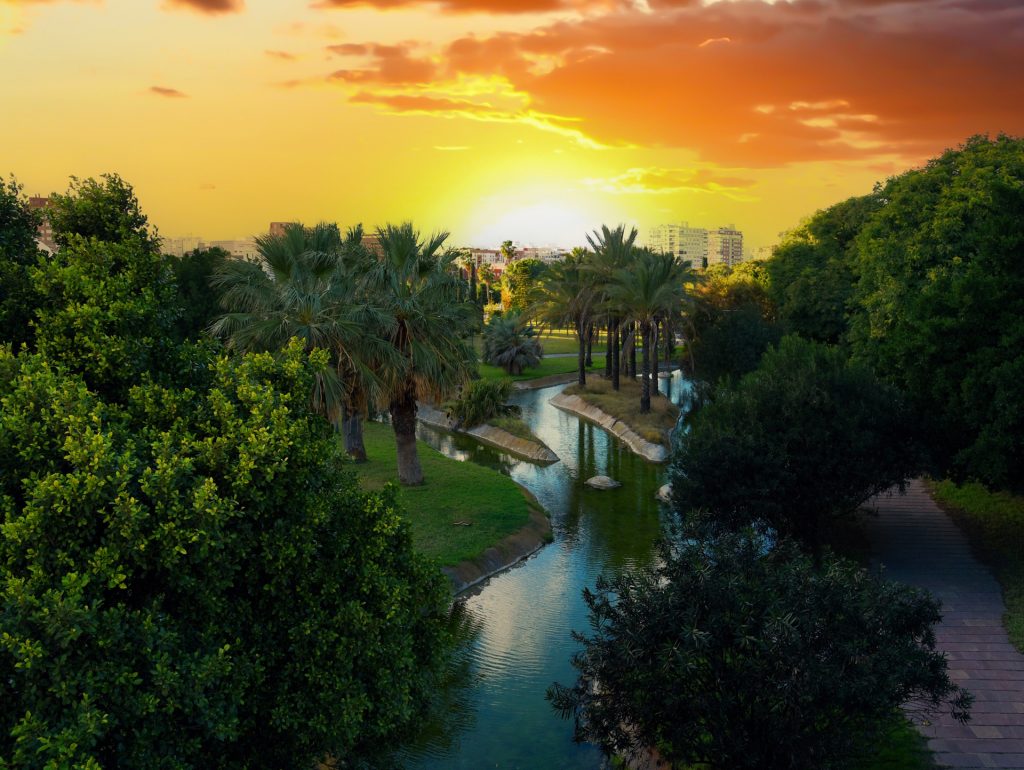
Valencia Central Park on Turia River. City park with gardens and green palm trees. Green trees in park.
When Valencia’s dead-center Turia River flooded and was rerouted to south of town, did the city fathers build malls in the riverbed? Not in enlightened Valencia, where citizens and visitors now relish Turia Gardens, a 336-acre, six-mile-long park where the river once flowed. Densely planted, with walking, running, and cycling trails instead of roads, it connects people, just as the river did. Life is lived and spirits are renewed in this urban backyard, beckoning with picnic tables, benches, bars, cafés, outdoor gyms, ball courts and fields, playgrounds, skateparks, dog runs, shaded nooks, 18 whimsical pedestrian bridges, and hardy WiFi. Turia Gardens is as civilized as the museums and theaters that border it. jardindelturia.com