AS ADOLESCENT OBESITY RATES RISE IN THE STATE AND NATIONWIDE, HACKENSACK MERIDIAN HEALTH IS STEPPING UP, EXPANDING ACCESS TO NATIONALLY ACCREDITED BARIATRIC CARE FOR YOUNG PATIENTS AND HELPING THEM RECLAIM THEIR HEALTH, CONFIDENCE, AND JOY
BUY AMANDA MCCOY PHOTOS BY AMESSE PHOTOGRAPHY

Adolescent obesity has become one of the most pressing public health concerns of the modern era, affecting nearly 1 in 5 children in the U.S., per data from the Centers for Disease Control and Prevention. Rates have more than tripled since the 1970s, and today nearly 15 million children and adolescents ages 2-19 are living with obesity. It’s a chronic, complex disease, one that not only increases a child’s risk of developing other serious health conditions like diabetes, cardiovascular disease, or breathing disorders, but also takes a significant toll on their emotional well-being, self-esteem, and mental health, especially during these precious years when a young person’s identity and social skills are still developing.
But there is a bright spot. Adolescents with obesity and their families have resources, and studies show that high-quality 247 clinical intervention produces outcomes that are not only positive, but life-altering. The state’s largest healthcare network, Hackensack Meridian Health, has long recognized the growing need for comprehensive, specialized care for the millions of adults and children with obesity in the state, and today two of its campuses offer nationally accredited bariatric programs for adolescents. In December, Hackensack University Medical Center became the second Hackensack Meridian Health hospital (joining Jersey Shore University Medical Center) to earn accreditation as a Comprehensive Center with Adolescent and Obesity Medicine Qualifications from the Metabolic and Bariatric Surgery Accreditation and Quality Improvement Program (MBSAQIP). The designation reflects rigorous standards for patient safety, multidisciplinary staffing, and long-term outcomes for both adult and adolescent patients.

“An important thing for people to understand is that obesity is not something we can attribute to a single issue,” noted Dena Arumugam, MD, FACS, FASMBS, director of Adolescent Bariatric Surgery at Jersey Shore University Medical Center, which received MBSAQIP accreditation in 2023. “Obesity looks different from person to person, and it’s caused by a variety of factors that go far beyond eating habits and exercise, including hormones, genes, socioeconomic elements, and more. Because it’s a multidimensional disease, we provide comprehensive, A to Z care. We have specialists in charge of every aspect, including behavioral health, nutrition, and surgery.”

When treating an adolescent patient, the team typically follows a step-up approach. “We begin with lifestyle changes,” explained Dr. Arumugam. “Over a several-month process, patients work with nutritionists to change their eating and activity habits, sometimes aided by FDA-approved medications for weight loss. If those strategies do not help patients achieve adequate weight loss, next we consider bariatric surgery.”
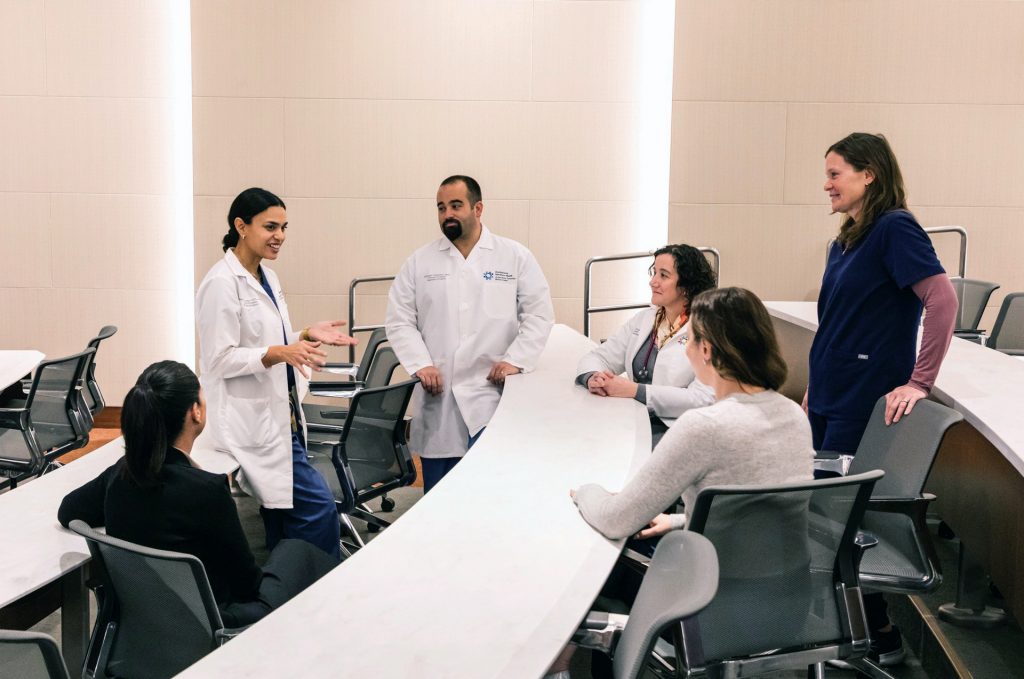
Before proceeding with surgery, Dr. Arumugam and the care team work diligently to ensure young patients and their families fully grasp every aspect of the procedure. “The surgery is very safe, but it requires lifelong changes. While the adult is the one signing the permission slip, the child needs to understand the restrictions of the procedure and be part of the process. This process usually takes place over several months, in which patients see the bariatric surgeon in addition to other subspecialists (nutritionists, psychologists, pediatric specialists, endocrinologists) prior to surgery, so everyone understands what’s involved for success and safety.”
As Dr. Arumugam explained, gastric sleeve is the preferred surgery for adolescents. As opposed to gastric bypass surgery, which reduces the stomach to the size of an egg and reroutes the intestinal transit of food, gastric sleeve is a minimally invasive procedure that reduces the size of a patient’s stomach by approximately 75-85%, making it a thin “sleeve” the size of a banana.
“It’s our first recommendation for younger patients because it involves less rerouting and rearrangement of the intestinal tract,” said Jun Tashiro, MD, MPH, FACS, FAAP, FASMBS, a board-certified pediatric surgeon and the surgical director of Adolescent Bariatric Surgery at Joseph M. Sanzari Children’s Hospital at Hackensack University Medical Center. “It requires just five small incisions, and patients are usually up and walking around the very same day.”
Dr. Tashiro explained that for the physical recovery process, patients typically experience mild pain at the site of the incision that dissipates in one or two days and can be controlled with a pain medication regimen. He recommends the patient rest and take it easy at home for about a week, and they can return to sports and physical activity in two weeks.
Post-op dietary guidelines involve starting with a liquid diet and gradually increasing the consistency of foods over the next two months. “It’s similar to teaching a baby how to eat for the first time,” noted Dr. Tashiro. “We start with liquids and protein shakes, then add purees, then soft foods, and eventually work our way up from there. Patients are also being guided on mindful eating practices and being intentional about what they eat. We are very prescriptive with our diet and activity plans; they are all tailored to the individual. We also make sure parents and patients have 24/7 access to our care team if they have any questions or concerns at any time.”
Surgical outcomes, noted Dr. Tashiro, are incredible. “We typically see a 50% loss in excess body mass index (BMI) in about six months, then another 25% after that. Multiple years of follow-up show that weight loss maintenance continues long-term, having a profound impact on the patient’s quality of life as they grow into adulthood.”
While the short- and long-term physical benefits of surgery are significant (the doctor touted an astounding 95% remission in type 2 diabetes), Dr. Tashiro said the emotional, mental, and social advantages are equally life-changing.
“The bottom line is that this surgery changes lives,” said Dr. Tashiro. “We see patients who are 13, 14, 15 years old and have been struggling with weight their entire lives. Many are genuinely trying their best, but they still can’t lose the weight. Medications can slowly chip away at these issues, but surgery is a reset button. Because of how regimented we are with pre- and post-op care and diet plans, surgery has such a large impact on these patients. One year after the operation, sometimes we can barely even recognize these patients their personalities are so much brighter.”
Dr. Arumugam echoed the sentiment. “The emotional and mental impact of obesity as a teen or adolescent is significant, and that can stick with someone for their entire life,” she said. “Obesity is a disease, and if we can treat it earlier in life, we can change their entire trajectory. It’s so rewarding to see the huge change in their health and self-confidence.”

K.Hovnanian Children’s Hospital at Jersey Shore University Medical Center
Joseph M. Sanzari Children’s Hospital at Hackensack University Medical Center
1945 NJ-33, Neptune City / 30 Prospect Avenue, Hackensack
hackensackmeridianhealth.org/kids