

LAUDED FOR ITS LUXURIOUS TEXTURE AND STUNNING PRESENTATION, BEEF WELLINGTON IS A LONG-TREASURED HOLIDAY FEAST CENTERPIECE. THIS SEASON, DON’T LET ITS COMPLEX PREPARATION INTIMIDATE YOU, HOME CHEFS; PRESENTING A DECONSTRUCTED VERSION THAT PACKS ALL THE FETE AND FLAVOR WITHOUT THE FUSS
BY CHEF DAVID BURKE PHOTO COURTESY OF DAVID BURKE HOSPITALITY MANAGEMENT
Beef Wellington is iconic, synonymous with Epicurean decadence due to its sumptuous combination of luxe ingredients, flavors, and textures: whole beef tenderloin coated in a layer of duxelles (mushroom paste), surrounded by foie gras, wrapped in puff pastry, and served with a silky sauce like black truffle Madeira. It’s the ultimate celebratory dish, which is why Beef Wellington is a fixture on my Christmas menus.

It’s also considered a symbol of culinary prowess given the time-consuming nature of its preparation and the skill required to ensure a crispy crust, tender beef, and the integrity of the mushrooms, which is why home cooks tend to stay away from it. That’s too bad because it is a true crowd pleaser.
So, while I respect the classics, I also recognize the necessity for their evolution to accommodate modern tastes and lifestyles. That’s why I came up with a deconstructed version, which is less complicated than the traditional recipe. Also, it makes it easy to score that ideal trifecta of crispy crust, tender beef, and rich mushroom duxelles.
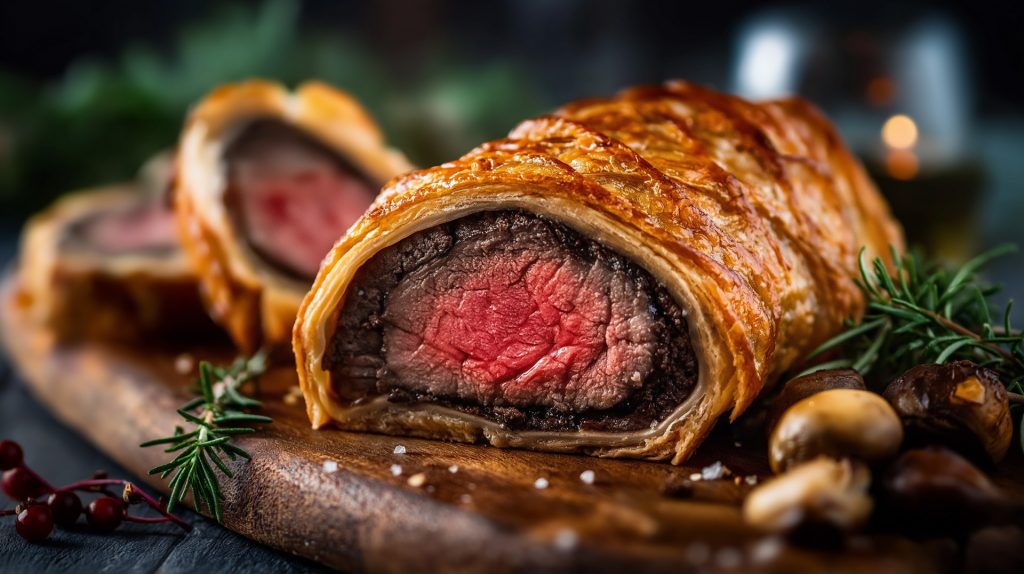
For this rendition, individual mushroom tartlets are crowned by a slice of foie gras (feel free to swap it out for prosciutto) and topped with filet mignon. Bonus, the filets can be cooked to different temperature preferences. Plus, this way you can do Beef Wellington for one or two; its indulgent decadence makes it a natural for Valentine’s Day, too. If you want the theatrics of the classic presentation, cook a whole filet, place it on a platter surrounded by the tartlets, and carve at the table.
As for the dish’s history, the popular belief is that it was created in honor of the Duke of Wellington. More likely, it is an English adaptation of the French filet de bœuf en croute (beef tenderloin wrapped in mushroom duxelles and puff pastry, sound familiar?). However, the first known recipe didn’t surface until the 1940s in a cookbook from Chicago’s Palmer House hotel. Beef Wellington enjoyed a run as a staple on high-end restaurant menus and dinner parties in the U.S. during the 1950s and ’60s, courtesy of Julia Child and its frequent appearance at feasts hosted by the Nixon and Kennedy White Houses. It fell out of favor for the last third of the 20th century, but today it’s enjoying a resurgence.
Above, you’ll find a simple but delectable approach. Don’t let the number of steps seem daunting; trust me, they are easy to follow. It serves four. Insider tip: if you want to serve fewer than four, make all the tartlets anyway, because topped with a dollop of goat cheese, crumbled bacon, and a slice of pear, they make a great appetizer for another meal.
DECONSTRUCTED BEEF WELLINGTON
Instructions:
Preheat oven to 375°. Bring filets to room temperature. Melt the butter in a large skillet over medium heat. Add shallots and cook until soft and translucent (2–3 minutes). Add mushrooms and continue cooking, stirring occasionally, until they release their liquid and it has mostly evaporated, about 15–20 minutes. Add wine and cook for another minute until the liquid has evaporated. Stir in thyme and parsley. Season with salt and pepper. Cook for one more minute, then remove from heat and let the mixture cool.
On a lightly floured surface, unfold the thawed puff pastry sheet. Cut 4.5-inch circles and gently press them into muffin tin cups. Crimp the edges overlapping at the top. Prick the bottom of each shell with a fork to prevent it from puffing up too much. Spoon some of the cooled duxelles mixture into each pastry shell, filling it about two-thirds of the way. Brush the exposed edges of the puff pastry with the egg wash for a golden-brown finish. Bake for 12–15 minutes, or until the pastry is golden brown and puffy.
Remove from oven and cool slightly before removing tartlets from the tin. Pat the filets dry. Season generously with sea salt and freshly cracked pepper just before cooking. Place an oven rack in the middle position and preheat the oven to 400°F. Place a heavy, oven-safe skillet over medium-high to high heat for at least 5 minutes until very hot. Add a high smoke-point oil like grapeseed. Add filets to pan and sear for 2 to 3 minutes per side until a deep golden brown crust forms. Use tongs to sear the edges for 15–20 seconds as well.
Immediately transfer the skillet to the pre heated oven. Bake until it reaches 5–10°F below your desired final doneness. Remove the skillet from the oven and transfer the steak to a plate. Tent it loosely with aluminum foil and let it rest for 5 to 10 minutes. Meanwhile, reheat the tartlets on a parchment lined baking sheet. To assemble, center a tartlet on each of four plates. Top each with a slice of foie gras, followed by a filet. Serve with your sauce of choice.
Red Horse by David Burke
26 Ridge Road, Rumson / 732.576.3400 27
Mine Brk Rd, Bernardsville / 908.766.0002 redhorsebydb.com / chefdavidburke.com